Showing posts with label Body Image. Show all posts

Wednesday, May 9, 2012

What I've Been Reading

I have limited access to a computer at the moment since mine crashed last week, so here are some quick links I've been enjoying/critiquing:

Really? Where is this woman's face/other body parts? Why is this "sexy"?

Marie Claire has some advice about your pubic hair... While I normally applaud articles that talk about vaginas, this article is just creepy. No, I don't want my vagina to look like I'm 12 years-old...

The truth about romantic comedies and fairytales...

Monday, April 2, 2012

The Black Swan Complex Devours More Young Women

Didn't Black Swan teach us anything about a woman's quest for perfection gone awry? My answer was "Absolutely not!" after viewing this preview for Dance Moms: Miami.


Good news psychologists! You'll be employed forever. The saddest part of this video is that we consider this to be entertainment. Watching young women compete and force their bodies into extreme physical shape is a source of amusement. The mothers are also scary and reminiscent of Nina's mother in Black Swan.

Nina diets and practices obsessively to achieve "perfection." She sacrifices her body and ultimately her life for her craft. I wrote a paper last year arguing that the final scene in Black Swan demonstrates Nina's rebellion against the constraints of the society in which she lives. Her final words are "I was perfect" signifying that to preserve a perfect performance, she must die at the end. It is only in death that she can finally be perfect. She rebels against the world that makes her "imperfect" by taking her own life and making sure that her last dance was "perfect." While this is a work of fiction, it's a frightening reality on Dance Moms. When I hear people discuss the show, I hear them say, "It's awful. I can't believe those parents." Then, why are we watching? Will you be watching for the premiere tomorrow?


Monday, March 26, 2012

What I've Been Reading

I was recently researching the London School of Economic's Gender Institute and found this article about a man who sued the university for being "anti-male." After 6-weeks in the Gender, Media, and Culture program, he declared that the curriculum discriminates against men. This great article from The Guardian explains that the goal of Gender Studies is to consider the positions of all people including LGBTQ individuals, people with disabilities, etc. I think that Gender Studies is often misinterpreted as being anti-male. Feminists are supposed to be man-hating witches that keep voodoo dolls of men in their rooms. Of course, I do not think this, and men have to be included in conversations about women's rights because sexism is a form of systematic oppression that men and women perpetuate. Also, I think it is a bit ridiculous that this man is getting so much attention when the time could be spent on more important issues (like the ones this man was learning about in class but not listening to!) 

(On a random note: While I am not anti-all men, I would like to state that telling a woman that God told you to tell her that she is beautiful is NOT an appropriate or believable pickup line. Really, student who used that pickup line on me last week! I'm starting to think my love life is hopeless because if that's the best I get, then I'd rather be single forever.)

This mom put her seven-year old child on a diet and then wrote an article about it in Vogue. I just want to give that child a hug. It's sad that we live in a culture where this woman is getting a book deal for calling her child "fat."

To end on a positive note, I recently viewed the "Get Real" commercials for Kotex that address the absurdity of tampon ads. I appreciate that these commercials assume that women are smarter consumers than they are given credit for.

Empowering, Funny... You decide.


*Special thanks to Megan Early for sending the "Get Real" commercials.

Sunday, March 4, 2012

Sizeism on Display in American Idol Top 13

Yesterday, I had a conversation with my dad about the contestants in the American Idol Top 13, and he pointed out that America always chooses the more attractive and thin people to continue on in the competition. This is not a shocking revelation considering the transformations of past American Idol participants such as Jennifer Hudson, Carrie Underwood, and Katherine McPhee. Jennifer Hudson's doing weight loss commercials. Carrie Underwood's slowly ditching her "good girl" image for her listeners, and Katherine McPhee has become a Hollywood starlet with the new television show, "Smash." McPhee discussed her struggles with weight and and an eating disorder openly in 2010. At the same time as she was sharing her body struggles, Katherine appeared in this heavily-Photoshopped image on the cover of SHAPE magazine. Can we ever give women a break?


These images are particularly troubling since this past week was National Eating Disorder Awareness Week. While these images and stories aren't the only factors contributing to eating disorders and poor body image among young girls, they matter. Children consume an absurd amount of television every day, and I often talk with young girls that think they need to be as thin as a Victoria's Secret model to look good in their bras or lose weight to look like their favorite celebrity.


Check out the Love your body Campaign and 20 Ways to Love Your Body!


The Denison Feminists also did this cool project where they put positive quotes on sticky notes all around campus (in the dorms, bathrooms, etc...)

Tuesday, February 28, 2012

Could Megan Fox Be "Nice" and "Naughty"?

After listening to Jean Kilbourne's enlightening lecture yesterday on the harmful media messages that contribute to the thin, perfect beauty ideal, I almost passed out after seeing this cover of Cosmo with Megan Fox. First, how many more surveys can Cosmo possibly come up with to tell women how to satisfy men? What ever happened to talking to your partner about what he enjoys sexually? Second, what about what women want to see during sex? Because sex is a one-sided act?!


Anyhow, the real point of this post is about how the magazine portrays Megan Fox. The tagline for her article states, "Megan Fox. Naughty or Nice? You Decide" and yet, hasn't the magazine already decided for us by putting this seductive image of Megan on the cover?


This article goes on to discuss Megan's tough girl image. This image is based around the fact that she curses and has tattoos. Well during a rough day, I've been known to use some swear words, so I guess I'm a tough girl too?! There is a problem with the limiting language we use to discuss women. Why is it so important that a woman is either naughty or nice? This article doesn't ask her about anything of substance, so we are led to believe that she is either naughty or nice. She can only fit within these two descriptions because according to this article, she doesn't have a brain. Why must we reduce women to these one-note images?

Thursday, February 9, 2012

A Real-Life Barbie Doll?

This article on a Romanian-born model with a 20-inch waist has some people outraged. 


There are some interesting dynamics surrounding this article. On the one hand, people are repulsed at this woman's size and her negative influence on young girls. The article points out that she eats three meals a day and still looks like this, evoking the Kate Moss illusion that "it's easy for women to be that thin."


On the other hand, I question if this is her natural figure, and it may be a source of anxiety for her that she looks like this. Thoughts?

Monday, October 3, 2011

How do we live in a contradictory world?

While flipping through the recent issue of Marie Claire with Reese Witherspoon on the cover, I was faced with a dilemma. Marie Claire has launched a "What I Love About Me" campaign where women around the country submit entries about the unique flaws and features they love about themselves. The goal is to make women feel confident inside and out. I think this would be a great campaign if the page wasn't situated next to an image of Jessica Alba, advertising for the newest makeup product that will "blow you away." It is also problematic that the best submissions are featured in the magazine. Who determines the flaws that are better than others?


If inner beauty matters so much, then why am I also reading an article in the magazine titled, "Ankles Away. When Samantha Marshall learned that a cosmetic procedure could vanquish her 'cankles,' she stepped right up, dreaming of dainty new ankles in kitten heels. But could it really be that easy?" This article describes a woman's insecurities about her "cankles" and subsequent plastic surgery procedure. This $4,000 to $6,000 procedure gives Marshall "elegant ankles" and her ankles are no longer a source of ridicule from her boyfriend. The cover image for this article is an image of a woman's legs. As I discussed in my previous post, this image has been overdone and makes women into objects.


For a final project last semester, I posed the question: How do we live in a contradictory world? The question came out of my frustration at the mixed messages my favorite magazines promote. Should I love my body or try to "transform" it with makeup, plastic surgery, and a new exercise routine? 


These conflicting messages are present in commercials, such as Sofia Vergara's Pepsi Zero campaign and her Kmart campaign. Check out Vergara's first commercial for Pepsi where she strips off her clothes before reaching the drink stand and the behind the scenes clip for Diet Pepsi's "Skinny" campaign. These commercials are selling the product as well as Vergara's figure. Yet, Vergara's Kmart campaign shares a different message. She advertises for her new line with Kmart by showing her clothes in many body types. She transforms into these women, suggesting that her clothing line is accessible to more women than the usual size two to four population brands like Abercrombie target. Vergara tells her audience to be sexy and proud of who he or she is. Take a look at the commercial and an article discussing the campaign.


The messages in popular magazines and commercials are not all positive or all negative. A woman can wear makeup to enhance her performance while feeling empowered and confident in herself. Women live in this contradictory world by taking what works for them and challenging the messages that don't. I don't want to try the toughest workout in America (No thanks, Marie Claire!), but I do want to check out the magazine's tips for skin care that is safer and more effective.


Sofia Vergara at the 2011 Golden Globes.
(http://www.fashionfame.com/wp-content/uploads/2011
/01/sofia-vergara-2011-golden-globe-awards.jpeg)

Sunday, September 18, 2011

What I've Been Reading

1. 20 Things You'll Regret Doing in College. 


Some highlights with my comments: 
Giving that person your cell phone number. Yes, why do I do this?
Wearing sweatpants in public. I will never regret this. I like being comfortable!
Never talking to that attractive person who seemed to be sitting just a few rows ahead of you in all your classes. Yes, I think we're all guilty of this! 


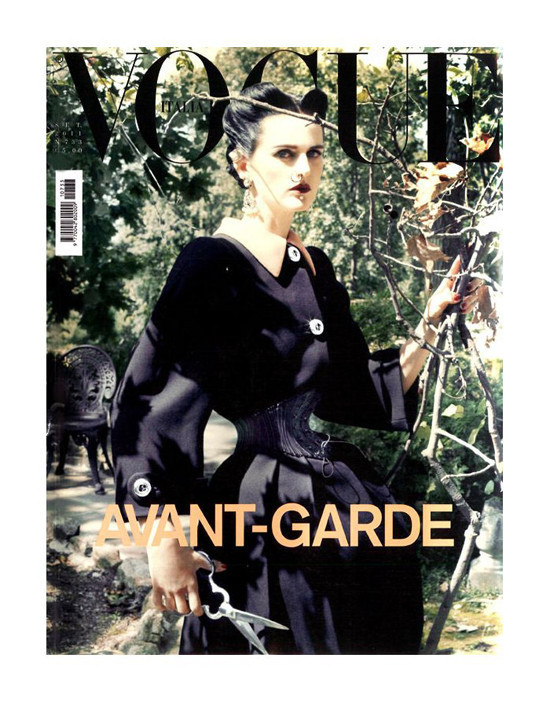
2. Italian Vogue cover replicates this image, left, of a woman with the world's smallest waist. 


Why is scary-skinny considered "fashionable"? These images are disturbing, and it bothers me that more people aren't holding Italian Vogue accountable for its cover.


3. Adolescent boys keep Deep Secrets. I read Dr. Niobe Way's book, Deep Secrets: Boys' Friendships and the Crisis of Connection, this summer, and I was happy to see that Feministing did a post on it a few weeks ago. Dr. Way is a developmental psychologist at NYU, and she's spent the past two decades doing research on male friendships during early and later adolescence. 


She found in interviews that boys in early adolescence have close friendships. They admit to needing close friends to share their feelings with, opposite to the stereotype that boys don't want to talk about their emotions. She noticed a shift in boys attitudes in later adolescence when male friendships dissolve and boys are stereotyped into only talking about girls, sports or video games.

Saturday, September 10, 2011

"Pretty is not enough" for Bare Escentuals Campaign


When I opened up my AOL a few days ago, an email from Bare Escentuals titled "Pretty is not enough" instantly peaked my interest. After some brief research, I found that Bare Escentuals, a company that promotes natural-looking makeup, has a new campaign telling women that pretty is important but being truly "beautiful" is the highest prize. The creators did a blind casting call where models ages 20-60 answered questionnaires. 

My first thought after reading the messages above was "Wait, what?! This doesn't make sense at all. What's the difference between being pretty versus being beautiful?" I'm still confused about what it is supposed to mean. It appears based on the website that this new campaign is meant to be a positive message about embracing inner beauty, but I'm not following.

Why does being "bold" have to be linked to being "beautiful"? Why does beauty have to be a prerequisite for having a bold, happy, "limitless" life? Also, let's consider the type of beauty Bare Escentuals is advocating for. A woman can only become a "force of beauty" if she uses the company's makeup, and her complexion is therefore flawless and conforming to society's perfect beauty standards. Isn't this ad just reinforcing the rule that outer beauty instantly transforms a woman's inner beauty? This is a real dilemma in a world where women are constantly told that the way they look is their greatest asset and source of self-worth. Let's take beauty out of the equation when we tell young girls that they can be strong, compassionate, independent, and spunky.

Links:
A fellow blogger questions whether this campaign is sweet or insulting.
An article from The New York Times describing the campaign.

Saturday, September 3, 2011

Note to Candies Ad Executives: Girls do MORE than shop and vacuum

I saw this commercial and needed to comment on the offensive messages it declares about young women. Apparently, Candies "girls" only wear high heels, exercise, spend hours accessorizing, and need a break after finishing their "work" which is vacuuming the carpet. Also, when you take a close look at the commercial, you notice that Vanessa Hudgens doesn't actually eat the cupcake. She just licks her fingers because well, she can't actually eat the full cupcake without worrying about her figure! Really, Candies! Girls deserve more respect than that. I take classes with many thoughtful, passionate, and intelligent young people that do a whole lot more than obsess about their appearances.


Is this belittling presentation of women the only way to sell a product? Sorry, Candies, I'm not buying it!


(http://thedailyglam.com/wp-content/uploads
/2011/06/vanessa-hudgens-candies-clothes.jpg)

(http://topdesingershoes.info/image/201101301302181759.jpeg)

These ads also suggest that women exist only as sexual objects. The point of the shoes is to look "sexy" for men, as shown in both the images above. There is something disturbing about both images, especially since this is 2011 and not 1955. 

Monday, June 20, 2011

Denmark's Beautifulpeople.com Drops 30,000 "Ugly" People

An exclusive Denmark-based dating site, Beautifulpeople.com, helps attractive people find love, and it has stirred controversy recently for it's dismissal of 30,000 people for their "lack of beauty." In response to criticism, a site manager, Greg Hodge, told The Guardian that, "We have to stick to our founding principles of only accepting beautiful people -- that's what our members have paid for. We can't just sweep 30,000 ugly people under the carpet." The site lost $100,000 in refunds, and rejected members are reportedly using a counseling helpline. One of the goals is to keep the "trolls" out, and let beautiful people fall in love and make beautiful children. This article reveals that 600 people have married as a result of this miraculous dating website.


Are you sensing my anger and repulsion, yet? First, what are the criteria for beautiful people? Beautiful people are chosen based on the photos they upload to their profiles. Isn't it possible that these people don't even look this way? In the online world, we can cultivate the identities and male attention we cannot possess in real life. My most obvious concern is that this site divides the "ugly" versus "beautiful" people based on I'm sure narrow European beauty ideals. Good job beautifulpeople.com, you sent 30,000 people to counseling (Yes, I'm know I'm over-exaggerating). This incident magnifies how much our outer looks define our inner selves. The message that's hidden in each article about this website is that "looks" are what matter. Inner beauty's a nice add-on, but you don't need it when you're beautiful on the outside!


Consider the website's opening image below:

I enjoy that the managers have made some attempt to make it look "multicultural." The website offers the seductive message that joining will lead members to an alternate world where only beautiful people exist. This image perplexes me. Is the point to create a human race without "ugly" people? Why are there animals in this? Each person in this image is thin and perfect-looking. I find it funny that this photo displays such a strong image of physical beauty while members only show their faces on their profiles. Another interesting point is how similar beauty ideals in Denmark are compared to the United States. I would argue that they may be more strict in Denmark. After spending a semester there, I could feel the tension for some of my peers who revealed that they "felt uncomfortable" around such "beautiful" Danish people and couldn't wait to return to the U.S. with more "normal-looking people." It was an intriguing comment for me because I hadn't looked at it from that perspective before.

While it would be easy to sit here on my high horse judging a website that is based in Denmark, I question: Is this site worse than People's The 50 Most Beautiful List they compile each year in the U.S.? Jennifer Lopez is People's Most Beautiful Person in the World for 2011.  I guess last year she didn't make the cut. Beauty politics change with age and levels of stardom. People.com is another site that divides the "beautiful" versus the "ugly" people. Yes, I don't want to be a hypocrite here. Of course, I enjoy flipping through the pages of attractive men gracing People's pages. They're irresistible and marketed well. People entices us with men that can cook, are sensitive, and look great without a t-shirt on. The inside and outside do matter because these men have both!? 

Yet, People's beauty contest is problematic. It tells young people that beauty is a competition and the greatest accomplishment in life. While I'm sure young girls aren't telling their parents, "This magazine contest is contributing to my low self-worth" they are telling their peers that "They do not make the cut in friend groups because they're not cool or pretty enough." These messages are not created in a vacuum, and I cannot place all of the blame on television programs or advertisements, but they contribute. Young people internalize messages to be "beautiful and thin," and therefore, judge others and themselves based on those standards.


Who will make the cut in 2012?
(http://www.people.com/people/package/gallery/0,,20360857_20481337,00.html)

I often question: How can we navigate such a contradictory world that tells young girls to "not judge a book by its cover" while bombarding them with thin, perfect beauty ideals on their favorite television programs? I think it can begin by educating ourselves about the ways media influences young people. If we can't make smarter advertisements, we can become smarter viewers, readers, and writers.

Friday, May 20, 2011

A Round Up of New Links to Explore

I've been getting a lot of topics to post lately, so before I forget, here are some interesting links I've found. 


1. AOL Music interviewed Jordan Sparks about her recent body transformation and new song. While at first I was skeptical since so many celebrities have come out lately with dramatic weight loss news, I think Jordan Sparks offers a positive message, saying that she wanted to become active and get more energy for herself. Even if she had good intentions and feels better about herself, she cannot control the language that the media uses to discuss her weight loss. The article focuses on her new svelte figure and evolved image, manipulating Jordan's reasons for losing weight.


2. Is Beyonce becoming more "white"? Check out this image of her fourth album cover. When I first looked at it, I didn't recognize her. This is a common trend with female singers. For more information, look at this image of Shakira before fame and after fame.


3. Continuing with the topic of Beyonce, she's decided to fight childhood obesity with Michelle Obama through her song "Move Your Body." Click the link to see her music video. It frustrates me that childhood obesity is framed as a problem that needs fighting and that exercise seems to be the only "solution" discussed in conversations about body image.
http://www.dyfuse.com/files/images/beyonce-move-your-body-video.preview.jpg

4. In recent studies about "Why Women Have Sex", researchers found that sex is more complicated for women, and that 1 in 3 women report feeling sad after having sex. The author considers the reasons why women have sex. For example, if a woman is having "revenge" sex, then maybe it explains why she is sad afterwards. Reading the comments below this article was enlightening because many of the readers feel the same way I do. One reader wrote, "Is it possible that women have the same sexual desires as any other species on the planet?" I agree. Can't a woman enjoy sex because of the same reasons as a man? Why are men allowed to have limitless desires while women must have reasons for having sex? 

Saturday, April 30, 2011

Some Concerns for Randy, Star of "Say Yes to the Dress: Big Bliss"

While watching a re-run of the royal wedding, I saw previews for "Say Yes to the Dress: Big Bliss" and I think there needs to be some discussion about the contradictions of even having a show like this exist on our televisions. This interview with Randy Fenoli on "Why Plus-Size Brides Deserve Extra Love" brings up many of the issues I raised in my last post.


Here are a few highlights:


-Randy says that the point of spotlighting plus-size women is because they have received such poor treatment from other bridal stores. My problem is that by putting them on the television screen in a separate show aren't you just further "othering" them?


-He then goes on to declare that his "plus-size brides" are comfortable in their own skin, yet they should avoid certain patterns or dresses that are unattractive for their figures. A bit of a contradiction? I was watching the regular show "Say Yes to the Dress" a few weeks ago, and a "plus-size" bride wanted to wear a mermaid-style gown. Randy came in and told her that it was unflattering over and over again, yet the bride was set on that design.


Another important issue this article raises is that dresses at bridal stores do not come in sizes above a 6 or 8. The average size for a woman is a size 14. When the average woman walks into a bridal store, she won't find a dress in her size. Yet, women can't be "average-looking" can they? I think the fact that these stores won't carry sizes above an 8 is another way that women's bodies are controlled and made to feel uncomfortable. Is it telling women that they need to be a size 8 to be a happy bride in the gown of her choice? I think the bridal industry can change this by offering more and better choices for all brides.
(http://www.blogcdn.com/www.stylelist.com/media/2009/10/say-yes-to-dress-240sc103009.jpg)

Wednesday, April 27, 2011

How Should We Talk about Bodies?

I've been pondering this question for the past few weeks: How Should We Talk about Bodies? I think the language that we use to talk about bodies directly ties with the way we feel about ourselves. There are so many labels available like fat, skinny, plus size, thin, fleshy, voluptuous, beautiful, healthy and the list goes on. I get frustrated with these labels because I question who defines what these labels mean. What is "fat" and what is "beautiful?" Also, why does "beauty" have to be an ideal? There have been many campaigns saying "Big is beautiful" and as Mika sings "Big Girl You are Beautiful." My problem with those statements is why do we need to categorize our bodies as "beautiful"? Doesn't that just perpetuate this idea that beauty is what is most important about ourselves?


I was prompted to discuss this topic on my blog after reading an article about Elizabeth Taylor's Bodaciousness. This article describes Taylor as full-figured, untoned, and uninhibited and discusses the shift in Hollywood to thin, wispy actresses.


A few points of interest for me are:


-Elizabeth Taylor is a cultural icon, and I think it may be more acceptable for her to have some flesh than the "average" woman. Are there exceptions for certain actresses? The tension I am trying to get at here is that I think it is acceptable and considered "beautiful" for some women to be "full-figured" while other women would be called "fat." I think it goes back to my discussion of how labels are defined and controlled.


-Another dilemma this article raises is that the "bodacious" body can be "sinful" and sexual while the thin body is pure. This is a problematic association. Why are some bodies allowed to have desires and others are not?


This article on Christina Hendricks provides another example of the problematic language used to describe some bodies. It begins by applauding Hendricks for her curves in a hostile atmosphere like Hollywood. It continues to say that she is not "big", and then Amy Larocca writes, "It is also not to suggest that her figure is attainable to the average duck. She looks the way movie stars used to look." So, even if Hendricks is a "bigger" woman, her beauty is still unattainable to the "average" woman? Can you see and feel my frustration in the ways women's bodies are spoken about?


Thursday, April 21, 2011

Some Advice from Elle Magazine if Your Boyfriend is Getting "Too Fat"

I found this column on Elle.com that has been entertaining and angering me all week. In this post, E. Jean is giving advice to a reader who feels her boyfriend is becoming "too fat." 


Here's a link to E. Jean's advice: My Boyfriend is Getting Too Fat


I have a few problems and questions about this conversation: Would E. Jean's response about loving your man for who he is be the same if a man had written in about his girlfriend getting "too fat"? I would say absolutely not! Not to mention the fact that she contradicts herself in the following statement telling her to subtly make him jealous and force him to go to the gym. The real question here is whether her boyfriend is happy and doing what he feels is best for his body. Also, what does it mean to be "in shape?" Does that mean being thin and fitting a certain western beauty ideal? I think this reader needs to question how much her relationship depends on her boyfriend's appearance. This shows that men are expected to fit into beauty ideals as well.

Saturday, April 9, 2011

To the Producers of "Little Miss Perfect"

I don’t know if it is possible to find a more blatant example of society’s absurd beauty standards than the beauty pageant world. A few days ago, I watched an episode of “Little Miss Perfect,” a reality television series following young girls who compete in beauty pageants. A red flag went off in my head when I listened to a disheartening exchange between a mother and daughter. The mother described to the camera that her youngest child was not winning any beauty pageants unlike her “talented” older sisters. When the mother asked the five-year old why she thought she did not win any pageants, she looked directly at the camera, tears streaming down her face, and said, “Because I am so ugly. I’m ugly.”

My first source of anger was at her parents. This little girl thinks she is “ugly” because she does not win beauty pageants. Her feelings of self-worth are solely based on her exterior, and she is only five-years-old. I also felt embarrassed and ashamed that I was let in to such a private moment in this little girl’s life. I felt ashamed for watching this show as a “guilty pleasure” when it exploits the destruction of young girls' self-esteems. While I do think the parents have some responsibility since they enter their children in these pageants, aren’t we all contributing to the problem if we watch these shows, keep up the ratings, and forget that the people we are watching are human? Why is seeing someone in pain so entertaining? Another sad realization is that even if this little girl begins winning, she will base all of her feelings about herself on her appearance, perpetuating this idea that physical beauty is the only prize worth living for.

Sunday, February 27, 2011

Imagining (Beyond) the "Thin" Beauty Ideal


Last week was Eating Disorder Awareness Week, and I wanted to honor that important issue on my blog. 

In my "Imagining (Beyond) the Body" course, we have been talking about society's construction of perfection and the pressures to live up to the thin beauty ideal that only 5% of the population can ever achieve normally. For example, have you ever considered why advertisements geared towards women sell "bite-sized" pieces? Think about it. Women cannot indulge by eating an actual bar of candy because they would never want to become "fat" or "undesirable." Advertisers perpetuate the idea that eating is indulgent (only for women) and cannot be a source of enjoyment because women should always be fretting about their weight. For more information, you can consult Susan Bordo's Unbearable Weight: Feminism, Western Culture, and the Body and Naomi Wolf's The Beauty Myth.

Also, my friend Hillary sent me a great article about "fully embracing the joy of good food" without a gender stereotype: http://ecosalon.com/foodie-underground-foodie-feminism/

The author references a commercial for the "Skinny" Pepsi can. I found an ad that I wanted to share. Take a look: http://www.youtube.com/watch?v=sTY9xQpauoY

Body image has been a topic of interest for me over the last few years. Here's an excerpt from a paper I wrote last year:

Nineteen years of being subjected to the thin, voluptuous, young, and fit beauty ideal have taught me that it is never enough to be who I am, and I have spent the last few years breaking out of that body image prison. As an acne-ridden insecure teenager, I longed to be those teens on television with perfect looks and petty drama, but as a wiser college student, I have learned it is okay to like myself the way I am. When I look in the mirror, I see myself as beautiful because of my independence, compassion, and intelligence, yet I constantly feel the pressure to dislike something about myself.

My friends tear their bodies and self-esteem down, and I find those insecurities seeping into my self-confidence, slowly chipping away at it. After conversations with them, I wonder: Should I have had that piece of cake or should I be going to the gym once a day like them? It reminds me of a scene in Mean Girls where the “mean girls” are standing in front of a mirror pointing out their body flaws, and the newcomer Cady played by Lindsay Lohan feels that she needs to point out a few and play along. During those moments of self-doubt, I feel immense pressure to look a certain way, and it hits me how much strength it takes to fight those thoughts and see myself as the beautiful person I am. The question is how to build that strength in young girls who are overexposed to a body type only five percent of the female population in our society has (223).